
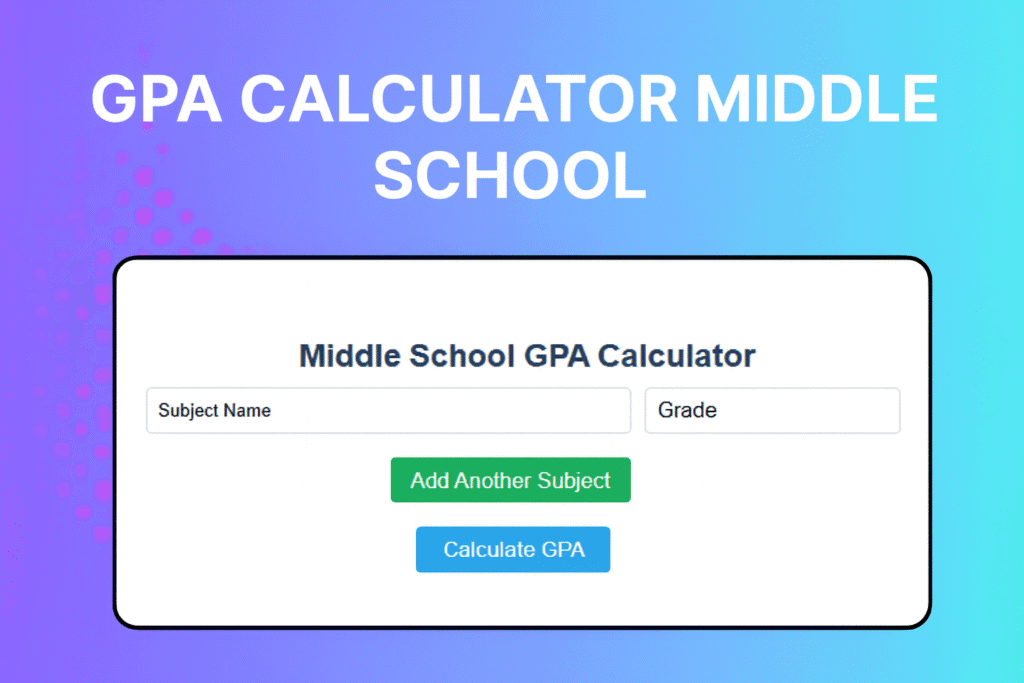
The GPA calculator middle school gives students and parents a simple way to understand how grades are converted into a clear number on the 4.0 scale. Middle school is often the first time students hear about GPA, and although it doesn’t affect college admissions directly, it plays a major role in class placement for high school. When you use a calculator designed for this level, the confusing parts of grading start to make sense, and the process feels far more manageable.
Many students feel stressed the first time they hear about GPA because it sounds official and serious. I remember a seventh grader telling me that GPA felt like a “secret code teachers use to judge you.” This blog aims to make the topic friendly and easy so students can track progress without anxiety. By using the right GPA tool and understanding how calculations work, middle schoolers build strong study habits early.
Middle School GPA Calculation Explained
Understanding how a middle school GPA is calculated is simpler than most students expect. Every letter grade equals a specific grade point, and those values come together to form a single average. A typical scale looks like this:
- A = 4.0
- B = 3.0
- C = 2.0
- D = 1.0
- F = 0.0
When students enter each class grade into the calculator, the tool instantly converts letters into numbers. It then divides the total grade points by the number of classes to show an accurate GPA result. This method stays consistent across most districts, which makes online calculators especially helpful.
A small example makes this clearer. Imagine a student finishing the semester with grades like A, B, A, C, and B. When those convert to points and get averaged, their GPA becomes 3.2, which is a strong foundation for seventh or eighth grade. Many families use tools like the standard GPA scale to verify these values.
How the GPA Scale Works in Middle School
The middle school GPA scale is almost always unweighted, meaning advanced classes do not increase grade points. An A in Algebra earns the same 4.0 as an A in regular math. This changes in high school, when honors, APThesed IB claoccur sses offer a weighted boost. Middle schools keep things simple so students focus on learning rather than chasing points.
Every class that has a grade usually counts. This includes electives such as PE, Art, Band, or Technology. Because of this, a single low grade can impact GPA, but it also means a strong performance in electives helps your overall average. Schools may occasionally adjust policies, so families often check their district’s handbook for clarity.
Even though middle school GPA is not used on college applications, it can influence placement decisions. Many schools use GPA to decide who qualifies for honors math, advanced English, or accelerated science in high school. Strong academic performance in middle school often opens doors to more challenging courses later.
Using a GPA Calculator for Middle School Classes
A good middle school GPA calculator helps students track grades throughout the year instead of waiting for report cards. Tools like GPA calculators allow students to enter class names, select letter grades, and instantly see their GPA on-screen. This gives them a better understanding of how each assignment and test affects long-term performance.
Many educators encourage students to check their GPA a few times each semester because it creates awareness. When students see how one low quiz score affects the average, they often become more motivated to catch up early. This habit builds responsibility and reduces last-minute stress before final grading periods.
A calculator is also helpful for parents. Instead of guessing how grades translate into GPA, they can quickly see where their child stands and determine whether extra help might be useful. It becomes a shared conversation instead of a confusing mystery.
Middle School GPA vs High School GPA
It helps to understand the difference between the two. A middle school GPA acts like practice. It teaches students how grades turn into numbers and how averages work. A high school GPA, however, is part of the official transcript that colleges review.
This difference shapes how classes are organized. Middle school focuses on building core academic skills, while high school adds more complexity through weighted options. Even so, middle school grades may appear on the high school transcript when students take advanced courses such as Algebra I or Geometry early. These classes count for high school credit in many districts, though policies vary widely. Families often check district guidelines or resources like the National Center for Education Statistics for clarity.
Advanced Courses and Early Math Placement
Some middle schoolers take advanced math or accelerated language arts. These courses don’t typically boost GPA because of the unweighted system, but they do influence future opportunities. Students who complete Algebra in seventh grade often progress to higher-level courses like Pre-Calculus or Calculus by senior year. Colleges appreciate this progression because it shows readiness and discipline.
Many parents wonder whether taking advanced math early helps with college admissions. While the actual middle school grades don’t matter, completing higher-level math in high school does. A strong math sequence can strengthen a transcript and improve scholarship eligibility. The U.S. Department of Education offers guidance on curriculum planning for families exploring this pathway.
Why Tracking Middle School GPA Matters
Understanding GPA early gives students confidence. It teaches them how to manage workload, prepare for tests, and recover after setbacks. When a student gets a lower grade, they can plug it into the calculator and immediately see what improvement is needed to raise the average. This makes goals visible and manageable.
I recall a student who once felt discouraged after getting a C in science. She assumed it ruined her entire average. But when she used the GPA calculator, she realized the impact was smaller than she feared. That moment shifted her mindset, and she focused on steady improvement rather than panic. By the end of the year, her GPA climbed higher than expected.
Middle school is a safe place to make mistakes. GPA helps students understand the value of effort and consistency, but without the long-term consequences that come later in high school.
Final Thoughts on the GPA Calculator Middle School
A GPA calculator middle school gives students an empowering, stress-free introduction to academic grading. With clear explanations and easy tools, the process becomes simple enough for any sixth, seventh, or eighth grader to understand. When students learn how GPA works early, they enter high school with confidence and a strong foundation for academic growth.
If you want to explore grade scales, advanced classes, or credit policies further, resources like College Board, NCES, and local district handbooks are valuable references. With the right information and habits, any student can build a strong academic path from the very beginning.
What’s up to all, the contents present at this web site are truly amazing
for people knowledge, well, keep up the nice work fellows.